Modern education is no longer limited to textbooks and classrooms. Schools today are expected to foster physical fitness, emotional resilience, leadership skills, and holistic student development. One of the most impactful investments an institution can make toward these goals is installing a professional climbing wall.
are not just recreational structures — they are structured learning tools that build physical strength, mental discipline, and social skills in students of all age groups. From primary school to high school, climbing programs can transform how students approach challenges.
Here are five compelling reasons every school should install a climbing wall.
- Enhances Physical Fitness and Motor Skills
Childhood inactivity is a growing concern globally. With increasing screen time and reduced outdoor play, students require structured physical engagement within school premises.
A climbing wall offers a full-body workout that improves:
- Upper and lower body strength
- Core stability
- Balance and coordination
- Flexibility and mobility
- Cardiovascular endurance
Unlike traditional sports, climbing engages multiple muscle groups simultaneously while developing fine and gross motor skills. It encourages functional fitness rather than repetitive movement patterns.
Additionally, climbing can be adapted for different age groups and skill levels, making it inclusive and accessible for a broad student population.
- Builds Confidence and Self-Esteem
One of the most powerful benefits of a climbing wall in schools is its impact on student confidence.
Climbing presents a clear challenge: reach the top. Students must assess routes, manage fear, and push through physical discomfort. When they succeed, even on beginner routes, they experience a strong sense of accomplishment.
This process builds:
- Self-belief
- Risk assessment skills
- Emotional regulation
- Growth mindset
Every completed climb reinforces the idea: “I can overcome challenges.” Over time, this mindset extends beyond physical activity into academics and personal development.
Students who regularly participate in climbing programs often demonstrate improved resilience and a more positive attitude toward difficult tasks.
- Improves Focus, Problem-Solving, and Academic Performance
Climbing is often described as “physical chess.” It requires planning, strategy, and concentration.
While climbing, students must:
- Analyze the route
- Plan hand and foot placements
- Maintain balance
- Adjust techniques mid-movement
- Stay calm under pressure
This combination of physical and cognitive engagement strengthens executive functioning skills such as focus, memory, and decision-making.
Studies in educational psychology consistently show that physical activity improves cognitive performance. A climbing wall integrated into physical education programs can contribute to:
- Better classroom attention
- Improved concentration span
- Reduced stress levels
- Enhanced learning retention
When the body is active, the brain performs better.
- Encourages Teamwork and Leadership
Although climbing can be an individual activity, it is highly collaborative in structured school environments.
Students often:
- Encourage peers during climbs
- Learn basic belaying under supervision
- Share strategies for completing routes
- Develop trust in safety systems
This builds communication skills and mutual respect. Students learn to support others while managing their own responsibilities.
Leadership skills naturally emerge as experienced climbers mentor beginners. Schools can even establish climbing clubs or inter-school competitions, creating opportunities for student leadership roles.
The climbing wall becomes more than a physical structure — it becomes a community-building platform within the institution.
- Promotes Safe Risk-Taking and Emotional Resilience
Children need opportunities to experience controlled risk. Overprotective environments can limit resilience development.
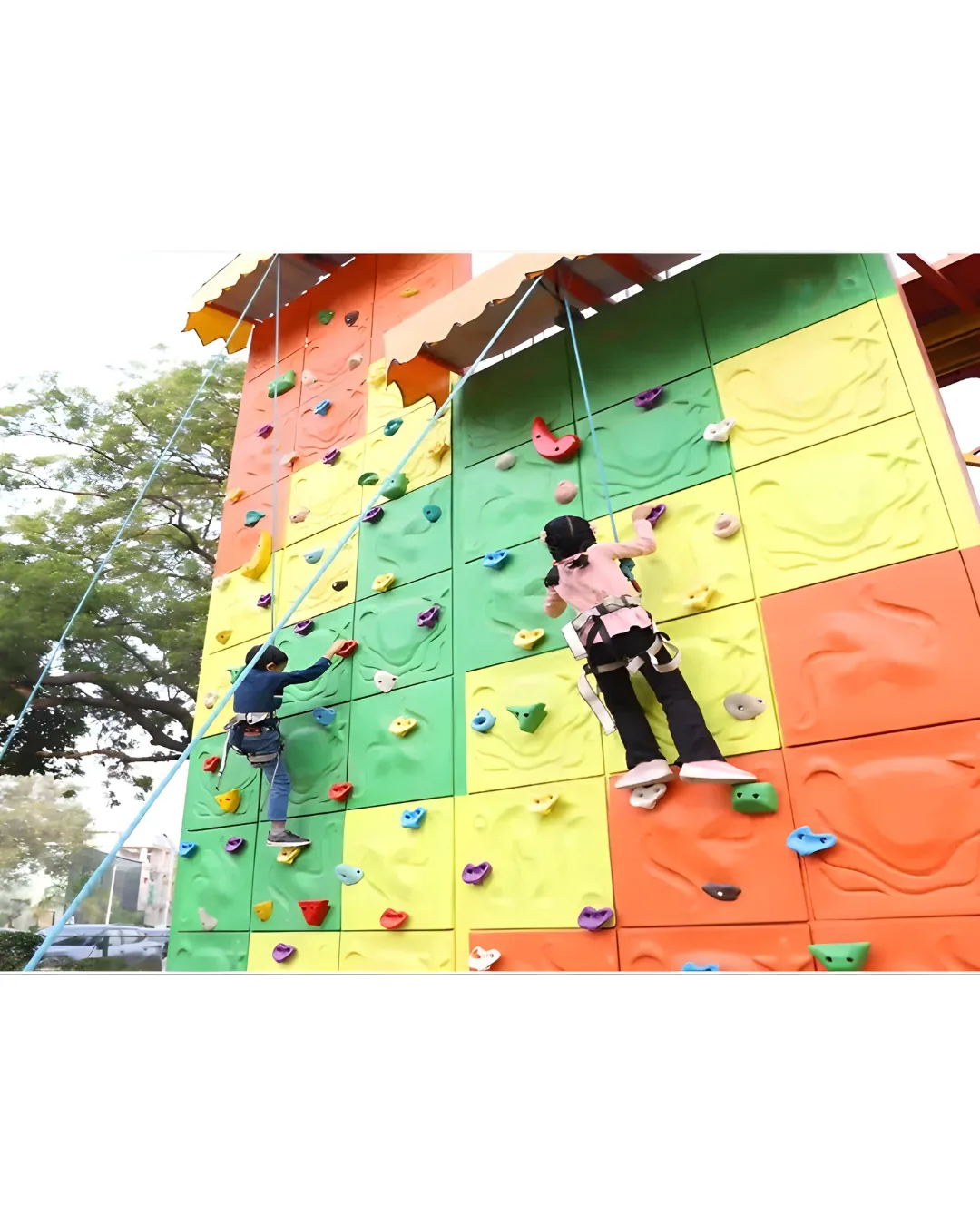
A professionally installed climbing wall provides a safe framework where students:
- Confront fear of heights
- Learn to manage anxiety
- Practice calculated decision-making
- Experience failure and try again
Safety harnesses, certified instructors, and proper supervision ensure that risk is managed responsibly. However, the psychological experience of overcoming fear remains authentic.
This builds emotional strength and adaptability — qualities essential for both academic and life success.
Students who learn to handle fear on a climbing wall are more likely to approach exams, presentations, and future career challenges with confidence.
Additional Institutional Benefits for Schools
Beyond student development, installing a climbing wall offers strategic advantages for educational institutions:
- Enhanced School Reputation
Innovative infrastructure positions the school as progressive and student-focused, which appeals to parents seeking holistic education.
- Increased Enrollment Appeal
Unique facilities differentiate the school from competitors in a competitive education market.
- Extracurricular Revenue Opportunities
Climbing walls can support after-school programs, summer camps, and community workshops.
- Structured Physical Education Innovation
It modernizes the traditional PE curriculum and aligns with experiential learning models.
Safety and Professional Installation Matters
For schools considering installation, partnering with experienced climbing wall providers is critical. Proper design ensures:
- Age-appropriate wall height and difficulty
- Certified safety equipment
- Impact-absorbing flooring
- Instructor training and maintenance support
When designed and managed professionally, climbing walls maintain high safety standards while delivering long-term educational value.
Long-Term Impact on Students
A climbing wall does more than provide recreation. It builds a culture of perseverance and achievement.
Students who regularly climb tend to develop:
- Stronger posture and physical confidence
- Better stress management
- Increased independence
- Improved peer relationships
- Higher tolerance for challenge
These attributes are foundational for lifelong success.
Education is not just about academic scores — it is about preparing students to face real-world obstacles with confidence and resilience. A climbing wall supports that mission directly.
Conclusion:
Installing a climbing wall in schools is not merely an infrastructure upgrade — it is a strategic investment in student development.
From improving physical fitness and cognitive focus to building confidence, teamwork, and emotional resilience, climbing walls provides multidimensional benefits. They create a safe environment for growth, structured risk-taking, and personal achievement.
In an era where schools are striving to balance academics with holistic development, a climbing wall stands out as a powerful, future-focused solution.
By integrating climbing into the educational ecosystem, schools equip students with strength — not just in their muscles, but in their mindset.